Deer Jump Reservation
Features:
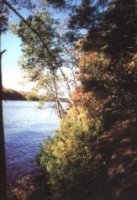
Long narrow property along Merrimack River. Beautiful hemlock groves, horsetail, an open meadow, and high bluffs.
More than 10,000 years ago, glaciers shaped Deer Jump Reservation’s steep river banks and left behind striated boulders. Torrents of water pouring from the melting glacial ice deposited sand and clay in outwash plains. Stagnant ice left behind step-like deposits of glacial sediments known as kame terraces.
Both paper and the less common black birch grow in these woodlands. Black birches have smooth, dark brown bark with white scars; twigs and leaves give off a wintergreen aroma when crushed. A stand of silver birches near the Route 93 crossing provides pleasant shade, and threatened river birches grow on the peninsula at the Lawrence line. Other hardwoods include maple, ash, beech and mature American elm trees. Sassafras trees are also abundant; at one time, oil was extracted from their roots and bark for use in soaps and medicines. Deer Jump Reservation is also home to extensive stands of hemlocks and stately groves of immense white pines. A great horned owl has been observed nesting in Deer Jump’s woodlands and white-tail deer, red fox, turkeys and Great Blue Herons are frequently sited.
Deer Jump wildflowers include Jack-in-the-pulpit, partridgeberry, lady slippers, wild oats, trout lilies, and cardinal flowers. Hollow-stemmed horsetails grow along the riverbanks; they lack leaves and resemble miniature bamboo. Early settlers used them to scour dishes. Horsetails are the living descendants of tree-sized plants that were common three hundred million years ago.
History:
Long before European settlers came to Andover, the Penacook Indians traveled up and down the Merrimack River, fishing and hunting game. A Penacook village was located on Pine Island and burial grounds have been found near the riverbank. Local Indian artifacts can be seen at the Phillips Academy Peabody Museum. During the last quarter of the 17th century, the Penacook Indians were feared by the residents of Andover. In 1675, the Indians attacked from the north, crossing the river, killing some settlers and taking others hostage. Much of “Moose Country,” the flat sandy plain from Fish Brook to present-day Lawrence (then a part of Andover) was dotted with garrisons to protect the farmers. A blockhouse that stored armaments was located in what is now Deer Jump Reservation.
During the 17th and early 18th centuries ferries carried passengers from Deer Jump across the Merrimack. Deer Jump Falls once provided the power for a grain and saw mill. During the mid-1800s, after the success of the textile mills in Lowell, the Essex Company considered building a large dam at Deer Jump to provide power for a rival mill. Instead they built their 900 foot long dam at Lawrence, flooding out Deer Jump Falls but allowing Deer Jump Reservation to remain a rural retreat.
Through the efforts of Harold Rafton, Andover’s renowned conservationist, Deer Jump was purchased between 1960 and 1973. Mr. Rafton considered the acquisition of Deer Jump Reservation “the most ambitious and most rewarding” of all AVIS undertakings.
Video
Web Map:
Open HereSize:
131 acres
Location:
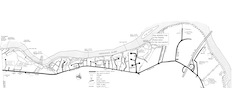
Between River Road and the Merrimack River from west of Interstate 93 to beyond the New England Power right-of-way behind the St. Francis property. Adjoins Spalding Reservation on the west.
Parking:
End of Brundrett Ave.; Launching Road on right beyond Mercury Circle; end of Fossen Way; ends of Inwood Dr., Nollet Dr., and Raven's Bluff.
Wardens:
Deer Jump / Behrakis / Spalding / Stott - Tewksbury line to the Power lines
Mike Wartman
Russ Cannizzaro
Luis Medina
Mike Aiken
Power lines to Nollet Dr.
Carl Hayssen
Nollet Dr. to Launching Rd.
Rob Candela
Rich Bizzozero
Launching Rd. to Town Land
Chris Grobicki
George Stoica
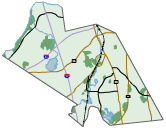 Andover Mass Trails & River Web Map